|
Special Effects (F/X) - Milestones in Film 1980-1982 |

|
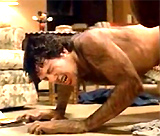
An American Werewolf in London (1981, US/UK)
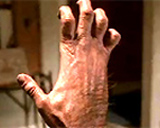
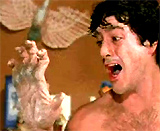
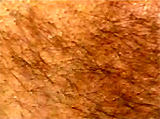
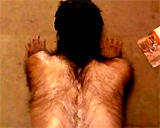
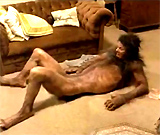
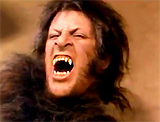
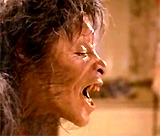
It told how backpacking American college student/tourist in the Yorkshires David Kessler (David Naughton) turned into a werewolf/lycanthrope - his body, face, and limbs crunched and his skin bubbled as it grew hair and his body stretched out and was elongated.
The transformation scenes were created entirely through a combination of prosthetics and robotics.
[Note: Some of the same special effects techniques were also used in Joe Dante's horror/comedy The Howling (1981) which featured stunning metamorphosis sequences of man-into-wolf (see below).] |
|
||||||||||||||||||||||||||||
|
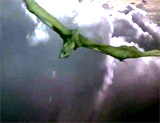
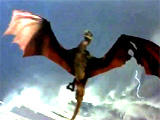
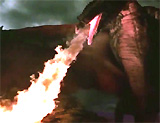
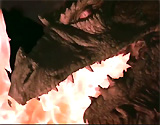
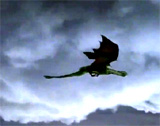
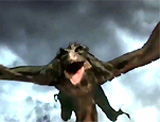
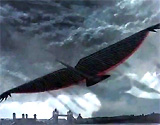
Dragonslayer (1981) The live-action fantasy film set in a fictional medieval kingdom introduced the innovative technique of Go-Motion, a process created by Industrial Light & Magic (and Lucas animator Phil Tippett) for a segment of Star Wars: Episode V - The Empire Strikes Back (1980) (e.g., the Imperial AT-AT walkers at the Battle of Hoth). The use of Go-Motion brought this film an Academy Award nomination for Best Achievement in Visual Effects, which it lost to Raiders of the Lost Ark (1981). It was a variation on the earlier technique of "stop-motion" animation (popularized by Willis O'Brien and Ray Harryhausen), by having the animated model (the Dragon known as a Vermithrax) make several computer-controlled moves within each frame, thereby giving it a more fluid, blurry, and natural movement. In the film, the dragon was portrayed as 40 feet long with an armored hide, and bat-like wings creating a wingspan of 90 feet. An hydraulic forty-foot model was created for the film, as well as 16 dragon puppets for the role of Vermithrax. Each was capable of flying, crawling, and breathing fire (with the use of flamethrowers).
By contrast, the traditional stop-motion technique was more jerky, static and wooden in appearance, as in Harryhausen's Clash of the Titans (1981) released in the same year. In the film's climactic battle (after an eclipse of the sun) between young apprentice Galen (Peter MacNicol), Valerian (Caitlin Clarke), and aged sorcerer Ulrich (Ralph Richardson), the flying dragon circled and then flew directly at Ulrich (whose arms were outspread) standing on a mountaintop, and seized him in its massive claws. Galen realized it was the appropriate time to smash the magical amulet with a huge rock. Ulrich's body detonated in a massive explosion that also destroyed Vermithrax in mid-air. Galen and Valerian watched as the dragon's body plunged from the sky and sank into a deep, fiery great lake. |
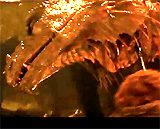 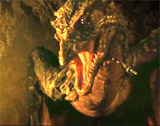 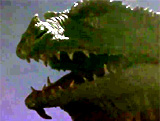 The Monstrous Fire-Breathing Dragon (Vermithrax) 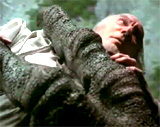 Sorcerer Ulrich in Claw of Dragon 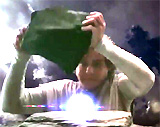 Galen Smashing Amulet 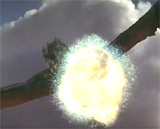 The Destruction of the Dragon |
||||||||||||||||||||||||||||
|
The Howling (1981) Joe Dante's horror/comedy The Howling (1981) featured stunning metamorphosis, shape-shifting sequences of man-into-wolf (one was juxtaposed with a TV scene of the Big Bad Wolf in The Three Little Pigs (1933)). The special groundbreaking makeup effects were originally to be produced by makeup wizard Rick Baker, but director Landis took him away to work on An American Werewolf in London (1981) (see above), so Baker's assistant Rob Bottin filled in - this was before the days of CGI. During the memorable werewolf transformation scene with incredible special effects, the pneumatic transformations - without CGI effects - changed in real-time, accompanied by crackling noises:
[Note: The third werewolf film of the same year was Wolfen (1981).] |
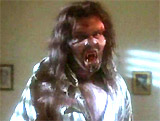 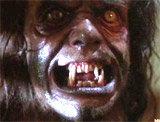 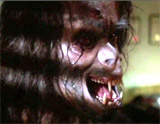 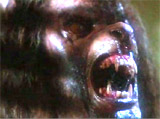 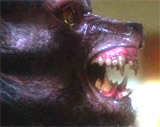
Werewolf Transformation Sequence |
||||||||||||||||||||||||||||
|
Looker (1981) Co-writer/director Michael Crichton's dramatic, high-tech science-fiction thriller, with the tagline: "IF LOOKS COULD KILL...", was way-ahead-of-its-time about plastic surgery, surgically-perfect models, and the replacement of models with CGI simulations. It was really a mediocre film with very impressive visual effects. It told about the murder of models, clients of Beverly Hills plastic surgeon Dr. Larry Roberts (Albert Finney), who were then replaced with virtual-reality imitations. It also included a political subplot regarding hypnotic suggestion to control TV viewers. It opened with a strikingly-beautiful perfume commercial TV model named Lisa Convey (Terri Welles - Playboy Magazine's 1981 Playmate of the Year, in her feature film debut). She was complaining to Beverly Hills plastic surgeon Dr. Larry Roberts that she had physical defects and imperfections that needed plastic surgery in order to make her more beautiful and perfect.
After photos and X-rays were taken of her, surgery was scheduled and performed, as the opening title credits played. Soon after, she ended up suicidally-dead under mysterious circumstances. She became the latest of three similar models operated upon by Dr. Roberts that also died, including Susan Wilson (Jeana Tomasina Keough), and Tina Cassidy (Kathryn Witt). Both of the previous models were also linked to the advertising firm that produced Ravish perfume - Digital Matrix, Inc. (DMI), headed by Jennifer Long (Leigh Taylor-Young), and owned by John Reston (James Coburn). There were suspicious clues (a pen and small brown jacket button) that led Lieutenant Masters (Dorian Harewood) to speculate that Dr. Roberts was possibly involved in their deaths. In the story, a fourth model named Cindy (Susan Dey of The Partridge Family fame), one of DMI's models, became frustrated by constant reshoots and complaints that her body didn't perform perfectly in motion, according to computer readouts: (Cindy: "I'm sick and tired of this computer. Why can't we just do the scene?...It didn't used to be like this - the computer telling us what to do").
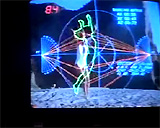
According to DMI's Jennifer, the research firm felt that its models (who had received surgery) were perfect in every way until they started to move during the commercial shoots, thus lowering their 'perfect body' scores. (Jennifer: "The girls couldn't maintain their scores. They looked perfect, but they weren't really perfect"). Therefore, the company decided it must digitally-scan the bodies of the models, to create a 3D computer-generated model of each one. After being scanned, the female model wouldn't have to appear in person for commercial filming: ("Once the model is made. The computer does everything") - the digital scan or model could be used instead. Each model was offered a contract (for $200,000) to have her body digitally-scanned to create a 3D computer generated model that could then be animated. Cindy allowed herself to be stripped naked in order to have her body and its measurements digitally scanned by the Digital Matrix research firm, to create a detailed 3D mapping or model of her entire figure. Her voice was also synthesized. As Cindy disrobed and she stood naked, she mumbled to herself: "I hope you're satisfied, perverts!" She kneeled as the round platform on which she was standing sunk into the floor, then stood up and asked: "Now what?" She was slowly rotated as topographic scanners mapped out her body. She joked during the mapping: "I hope you're satisfied. Perverts....Help. Rape" - and the computer reprimanded her: "Please do not move your lower jaw...Failure to comply wastes valuable computer time." The visual effects in the speculative film featured the first CGI human character, digitized and visualized by a computer-generated simulation of her body being topographically scanned - notably the first use of shaded 3D CGI in a feature film. Polygonal models obtained by digitizing a human body were used to render the effects. There were various implications about the ways in which advertising companies were manipulating viewers: with unreal, computer-generated digital actors, a LOOKER electronic blue light gun to put victims into a hypnotic trance, and digital pupilary eye scans to maximize the impact of ads on viewers. |
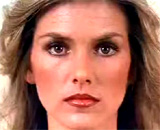 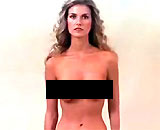 Looker Model Lisa Convey's (Terri Welles) Plastic Surgery 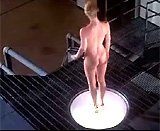 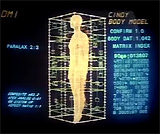 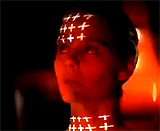 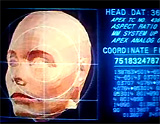 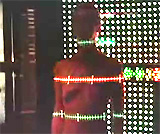 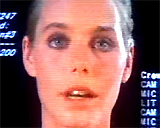 The Scanning Process - To Create the First CGI Human Character |
||||||||||||||||||||||||||||
|
Raiders
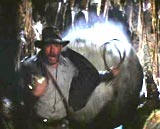
of the Lost Ark (1981) Both films used a new and revolutionary stop-motion animation technique known as Go-motion, developed by a team of innovators at Industrial Light & Magic (ILM). Go-motion was a process that involved a computer-programmed model that was slightly moved during each frame's exposure, causing a more realistic, blurred movement effect. In this Steven Spielberg-directed adventure film, the main segment utilizing Go-Motion was the film's climax - the opening of the Ark of the Covenant. As the sealed Ark was opened, whitish ghostly spirits arose. (The Ark's spirits, composited into the live footage, were actually small clothed puppets in a clouded water tank filmed in front of a blue screen.)
A few more of the film's most remarkable special effects shots included:
|
 The Boulder 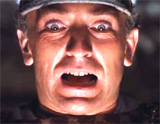 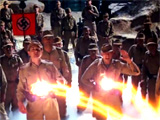  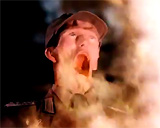 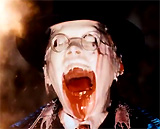 The Ark of the Covenant Sequence |
||||||||||||||||||||||||||||
|
Blade
Runner (1982) One of the most awe-inspiring visuals in film history, paying homage to Lang's Metropolis (1927), was the powerful vision of the Los Angeles cityscape at night, circa 2019, with giant, fire-belching towers, floating advertisements, giant television screens, and police "spinners" (flying cars). It was as if Los Angeles' sprawl was one giant oil refinery. The dark, futuristic vision of LA was accomplished using model shots and painted backgrounds. All images were based on the art design of legendary artist Syd Mead, who would collaborate with Jean 'Moebius' Giraud on TRON (1982) (see below). |
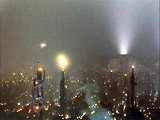 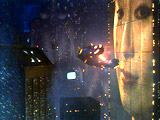
Los Angeles Cityscape |
||||||||||||||||||||||||||||

|
The Dark Crystal (1982) The film was composed entirely of puppets, matte paintings, and some miniature sets. The character and world designs were made by famed fantasy artist Brian Froud.
|
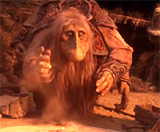 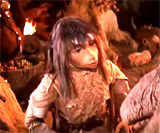 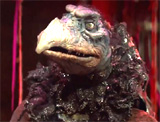 Puppet Characters |
||||||||||||||||||||||||||||
|
E.T. the Extra-Terrestrial (1982)
It was famous for the flying bicycle scene in which the kids escaped into the air on their bicycles, and later the scene of the alien and Eliott illuminated in silhouette (using miniatures) against a giant-size full moon. A variation of go-motion partially animated the children on their bicycles. Also, visual effects were employed for E.T.'s spaceship, and the believable alien itself (and its glowing red heart), although altered or digitally-enhanced in the 2002 remake for the 20th anniversary edition. (See below) |
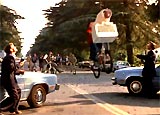 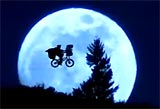 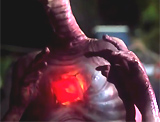
|
||||||||||||||||||||||||||||
 |
Koyaanisqatsi (1982) In Godfrey Reggio's non-narrated, feature-length, expressionistic and subjective experimental documentary film Koyaanisqatsi (meaning "life out of balance"), all set to Philip Glass' mesmerizing, pulsating, hypnotic, and minimalist electronic score - it was an art-house film that showcased innovative uses of time-lapse, slow-motion (and hyper-speed), and double-exposed (and super-imposed) photography - all part of a trilogy of Qatsi films that also included Powaqqatsi (1988) and Naqoyqatsi (2002), to show the immense difference between two worlds (the natural and the urban or man-made):
|
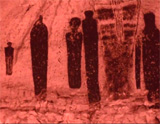 Hopi Cave Art 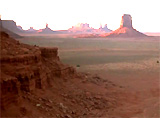 Landscapes (Monument Valley) 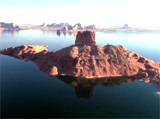 Rock Formations (Lake Powell) 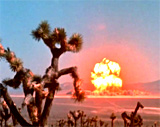 Atomic Bomb Tests in Desert  Clouds Reflected on the Side of a Skyscraper 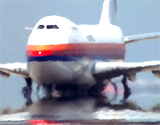 Massive 747 Jetliner Taxiing on Runway  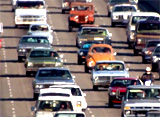 Lanes of Freeway Traffic 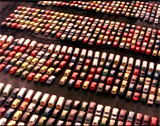 Colorful Parked Vehicles in Lot  Ugly, Dilapidated, Abandoned Slum Tenements and Social Projects  The Pruitt-Igoe Housing Project in St. Louis, MO 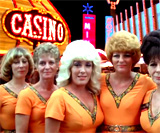 People and Technology 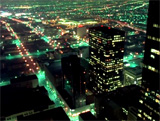 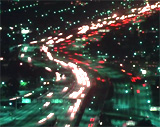 Highway Arteries into the City 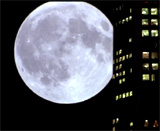 Massive Rising Moon 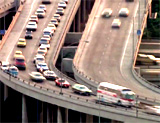 The End of a Frantic Day at Work 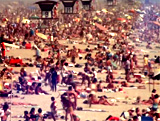 Escaping to Fun in the Sun - Crowded Beaches 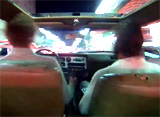  The High-Speed Frantic Pace of Life 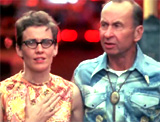 Candid Views of People on the Street Being Filmed  Rocket Launch  Rocket Explosion 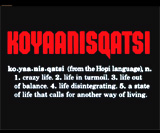 Translation of the Title: Koyaanisqatsi |
||||||||||||||||||||||||||||
|
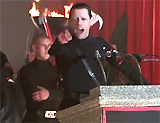
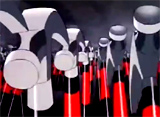
Pink Floyd: The Wall (1982) The animation of political cartoonist Gerard Scarfe was created for both Pink Floyd's multimedia concert and for the 95 minute Alan Parker film. It was a musical "free form video" masterpiece - a remarkable descent into madness and insanity through a series of rambling music video segments by burned-out and depressed rock singer Pink (Bob Geldorf) in a Los Angeles hotel room, mostly mindlessly watching TV - he constructed a physical and metaphorical protective wall around himself after the death of his father as he experienced flashbacks of his life and attempted to tear down his wall. There were 15 minutes of memorable, adult-themed animation that appeared periodically during the film by cartoonist Gerald Scarfe (including symbolic, sexually-explicit, botanical Freudian animation). It was one of the first truly adult animated work in terms of maturity - sexually and politically. One segment presented a misogynistic woman-as-destroyer/devourer motif. In the passionate "flowers" scene before the rock song "Empty Spaces," two flowers, one shaped like a male organ and the other like a female organ -- morphed into a couple having intercourse and then engaged in a bloody fight when the female flower revealed sharp teeth and devoured the male. Two of the most indelible animated images were of a dove that imploded and morphed into a dark monstrous bird of prey -- a fighter plane bomber over London, and as Pink envisioned himself as an eyebrowless, racist, fascist Hitler-like leader of a Nuremberg-like rally in "In the Flesh," marching hammers goose-stepped across ruins.
[Note: The film also featured one of the earliest commercial uses of time-lapse photography. In "Another Brick in the Wall, Part 2," there was disturbing imagery of schoolchildren in an authoritarian oppressive school turning into conforming, faceless zombies on an assembly line and stepping off into a meat-grinder.] |
  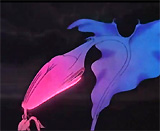 Adult-Themed Animations 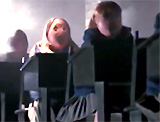 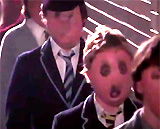 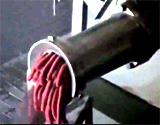 "Another Brick in the Wall, Part 2" |
||||||||||||||||||||||||||||
|
Star Trek II: The Wrath of Khan (1982)
The so-called "Genesis Effect" - a one-minute animated sequence, was cinema's first entirely (or all digital) computer-generated (CG) sequence of images. It marked the first cinematic use of a fractal-generated landscape, particle effects (a particle-rendering system was used to achieve the fiery effect), and 32-bit RGBA paint software created by Lucasfilm's Pixar group division at ILM (Industrial Light & Magic) The computerized simulation was first seen in a video proposal or demonstration presented by Dr. Carol Marcus (Bibi Besch), in which the once-dead planet was struck by a Genesis 'torpedo' and reborn or revived, as the camera raced quickly across the reddish and then greening surface of the barren planet, before becoming a reborn globe. Dr. Marcus headed up Project Genesis, a computer-simulated endeavor that sought to transform or re-animate uninhabitable worlds into lush paradises ("life from lifelessness"). She narrated the video and animation, in person and in voice-over:
The film also included the scene of Captain Spock's (Leonard Nimoy) self-sacrificial death to save the USS Enterprise from the Genesis Device explosion, with his ejection-burial in space to orbit around the newly-birthed planet caused by the Genesis Effect. Another special effect was the scene of the brain-munching earwigs, in which vengeful superhuman Khan (Ricardo Montalban) placed a parasitic, insanity-causing Ceti eel into the ears of Officer Chekov (Walter Koenig) and Captain Terrell (Paul Winfield). |
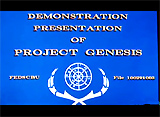 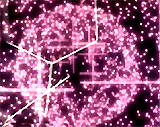 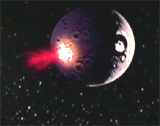 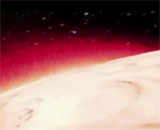 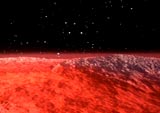  The Genesis Effect 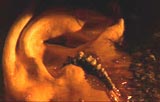 Brain-Munching Earwigs |
||||||||||||||||||||||||||||
|
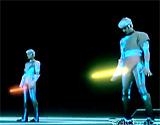
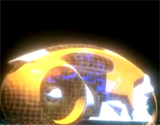
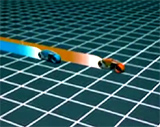
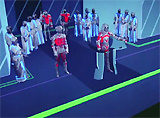
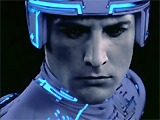
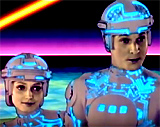
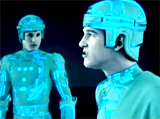
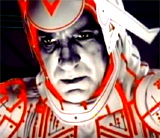
TRON (1982) It was refused an Academy Awards nomination because the voters felt the film "cheated" by using computer animation. In reality, the process was an extremely arduous one for animators. Seven years later, James Cameron's The Abyss (1989) won the Best Visual Effects Oscar for the same kind of technology. TRON was the first live-action film to extensively use 3D, computer-generated imagery (CGI) to any lengthy degree (about 20 minutes) - in this case, it created a full 3-D graphics world, in its most innovative sequence of the famed racing bike or Lightcycle sequence depicting computerized lightcycles in a high-speed race.
The Lightcycle sequence
used the artwork and vision of legendary artists Syd Mead and Jean
'Moebius' Giraud, and visual effects done with a combined effort by
Triple I, MAGI/Synthavision, Robert Abel
& Associates, and Digital Effects. [Note: Lisberger's animated film Animalympics (1980) had extensively used the effect in semi-preparation for what would become TRON.] The film also featured a soundtrack by Wendy (nee Walter) Carlos that melded synthesized music with the London Philharmonic's orchestral music. |
|
||||||||||||||||||||||||||||
 Where the Wild Things Are (2009) |
Where the Wild Things Are (1982-83) - 35mm Test Footage Maurice Sendak's children's book Where the Wild Things Are was the basis for Disney's experimental 35mm test footage, directed by John Lasseter (the future animator at Pixar). This pioneering and revolutionary animation (a 35mm test) combined (or digitally composited) both:
A film adaptation (with live-action and animation) of the book, directed by Spike Jonze, was released in late 2009. |
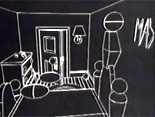 The CGI Generated Background 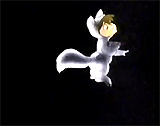 The Hand-Drawn Animation 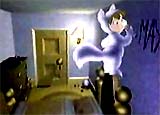 The Composite |
||||||||||||||||||||||||||||




 This
classic horror film contained a visceral transformation scene (that
won an Academy Award for Best Makeup for Rick Baker), the first to
win in the newly-established Oscar category.
This
classic horror film contained a visceral transformation scene (that
won an Academy Award for Best Makeup for Rick Baker), the first to
win in the newly-established Oscar category.