|
Oscars |
| Filmsite features one of the largest, most comprehensive and detailed collections of historical information about the Academy Awards (commonly known as the Oscars) on the Web, from the beginning of the awards in 1929 to the present day. The site chronicles each year of the competitive races for many of the major awards categories, as well as major sections of Oscar facts, trivia, statistics, milestones, omissions and snubs, and with selected movie title screens and posters. | |

| Background on The
Awards:
Except for the early years of the institution, the awards honored films made during the previous 12-month calendar year. [At first, to be eligible for an award, a film had to open in Los Angeles during the twelve months ending on July 31 of the preceding year. To allow each ceremony to cover films for a single calendar year - matching the eligibility period, the 1932/33 awards were based on a 17-month qualifying period. Ever since then, beginning with the 1934 awards ceremony, all awards have been based on openings in the previous calendar year. Films also had to be over 40 minutes long to qualify as feature-length.] Until 1954, the Oscars were presented mostly on a Thursday evening. From 1955 to 1958, they were presented on a Wednesday. From 1959 until 1998 the Oscars were, with a few exceptions, presented on a Monday night. Only since 1999 have the Awards ceremony taken place on a Sunday (traditionally in March). In 2004, the ceremony was moved even earlier (usually in February) to improve ratings and to be more relevant to the awards 'season'. |
|
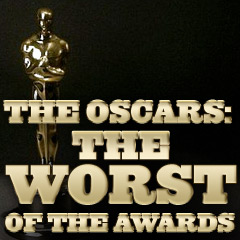
Comments About the Awards Themselves: The establishment of the Academy (and its awards system) has had a major effect and influence upon the film industry, due to the enormous boost a nomination or award (for a film or actor) creates, by giving prestige and bottom-line profits to a studio or performer. Studios have often engaged in expensive marketing and advertising campaigns to sway votes, and to encourage contractual loyalty during voting. The Academy has, with limited success, tried to limit the influences of pressure groups and promotion, box office gross receipts, and studio public relations and marketing on voting results. It has also attempted to limit votes for melodramatic sentimentality, atonement for past mistakes, personal popularity, and "prestige" or epic scale, but those influences have often had a decided effect upon the outcome of some of the poll results. Unfortunately, the critical worth, artistic vision, cultural influence, and innovative qualities of many films are not given the same voting weight. Especially since the 80s, moneymaking 'formula-made' blockbusters with glossy production values have often been crowd-pleasing titans (and Best Picture winners), but they haven't necessarily been great films with depth or critical acclaim by any measure. See The Worst Academy Awards Oscars for more. Like any other awards, recognitions, or "best" lists, the top nominees and winners do not necessarily reflect or objectively measure the greatest that cinematic history has to offer. Many of the most Deserving Films of All Time (see Films Without Awards) did not win Academy Awards® (and in some cases were not even included in the nominees). In addition, Top Box-Office Films aren't always guaranteed awards success either. And certain Film Genres (notably westerns, science fiction, and comedy) as well as independent films are not represented in balanced numbers throughout Oscar history - see extensive analysis of Best Picture Genre Biases. |
|
A full and complete history and commentary on the Academy Awards from its early beginnings to the present is available, by decade and by individual year. Each year displays the poster for the Best Picture winner. It must be noted that each year represents the production year of the films considered, not the year of the awards ceremony. For instance, the 1955 year refers to the Oscars awards ceremony in 1956, honoring films of 1955, and is referred to as the 1955 Academy Awards. Academy Awards History (By Decade):
|
||||||||||||

|
Academy Awards: Summaries This multi-part section provides a number of charts showing the top award winners in various categories, including: |
||||||||||||
|
Winners Charts This multi-part section provides Winners Charts for each of the following award categories: |
||||||||||||

|
This multi-part section provides a thorough overview of the 'Best Picture' category (originally known as Best Production):
|
||||||||||||

|
This multi-part section provides a complete detailed over-view by decade and year of the milestones achieved in the 'Best Picture' category. Each year provides both the title-screen and a prominent poster for the 'Best Picture' winner, plus lots of facts and trivia: Best Picture Milestones (By
Decade) |
||||||||||||

|
There are obvious biases in the selection of Best Picture winners by the Academy. Serious dramas or social-problem films with weighty inspirational themes, biopics (inspired by real-life individuals or events), or films with literary pretensions are much more likely to be nominated (and win). Glossy, large-scale epic historical productions with big budgets (of various genres) have often taken the Best Picture prize. Likewise for studio pictures with big stars - they are much preferred over quirky independent films, although that trend has begun to change in recent years. |
||||||||||||

|
This multi-part section provides a thorough overview of the 'Best Director' category (or Best Achievement in Directing). It also includes a link to the Youngest & Oldest Nominees/Winners in the category.
|
||||||||||||

|
This multi-part section provides a thorough overview of the 'Best Actor' category (or Best Performance by an Actor in a Leading Role). It also includes a link to the Youngest & Oldest Nominees/Winners in the category. |
||||||||||||

|
This multi-part section provides a thorough overview of the 'Best Actor' category (or Best Performance by an Actress in a Leading Role). It also includes a link to the Youngest & Oldest Nominees/Winners in the category. |
||||||||||||

|
This multi-part section provides a thorough overview of the "Best Supporting Actor' category (or Best Performance by an Actor in a Supporting Role - first awarded in 1936). It also includes a link to the Youngest & Oldest Nominees/Winners in the category. |
||||||||||||

|
This multi-part section provides a thorough overview of the "Best Supporting Actress' category (or Best Performance by an Actress in a Supporting Role - first awarded in 1936). It also includes a link to the Youngest & Oldest Nominees/Winners in the category. |
||||||||||||

|
This multi-part section provides a thorough overview of the "Best Screenplay/Writer' category (known by many names throughout the years: Motion Picture Story, Adaptation, Original Story, Screenplay, Writing Achievement, etc.). |
||||||||||||
|
Academy Awards: Mistakes & Omissions This multi-part section provides examples of "Mistakes & Omissions" that occurred in the awarding of Academy Awards (Oscars): |
||||||||||||

|
This multi-part section provides examples of Actors, Actresses, and Directors Who Were "Snubbed by Oscar" that occurred in the awarding of Academy Awards (Oscars):
|
||||||||||||
|
The multiple charts in this section contain possible alternatives (albeit sometimes opinionated and subjective) for many of the awards given throughout Academy history. |

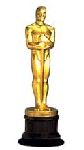 The Academy
Awards®, affectionately known as the Oscars®,
are the oldest, best known, most influential, most prestigious,
and famous of film awards. The awards (and gold-plated statuettes)
have been presented annually (the first awards ceremony was
held in May of 1929) by a non-profit professional organization
- the Academy of Motion Picture Arts and Sciences (AMPAS),
based in Beverly Hills, California, and founded in 1927.
Pricewaterhouse (now PricewaterhouseCoopers) has managed
the Academy Awards balloting process since 1935 - all but
the first six years of the Oscars. Ever since 1941, when
their now-famous confidential envelope system was introduced,
marking the first year of complete secrecy,
"the Envelope Please" has become a familiar phrase
that evokes the thought of the Academy Awards® ceremony.
The Academy
Awards®, affectionately known as the Oscars®,
are the oldest, best known, most influential, most prestigious,
and famous of film awards. The awards (and gold-plated statuettes)
have been presented annually (the first awards ceremony was
held in May of 1929) by a non-profit professional organization
- the Academy of Motion Picture Arts and Sciences (AMPAS),
based in Beverly Hills, California, and founded in 1927.
Pricewaterhouse (now PricewaterhouseCoopers) has managed
the Academy Awards balloting process since 1935 - all but
the first six years of the Oscars. Ever since 1941, when
their now-famous confidential envelope system was introduced,
marking the first year of complete secrecy,
"the Envelope Please" has become a familiar phrase
that evokes the thought of the Academy Awards® ceremony.